Bathing indoors is a sanitary ritual; bathing outside is an elemental event. When the body is submerged in 40°C mineral water while breathing sub-alpine air at 2°C, two opposite physiological states occur simultaneously. The core muscles relax completely under hydrostatic buoyancy, while the respiratory system remains alert, cooled by external oxygen.
Throughout historical bathing cultures—from the Icelandic laugar to the Japanese rotenburo and Roman mountain balnea—open water has never been treated as a simple vessel. It is an extension of the geology from which it rises.
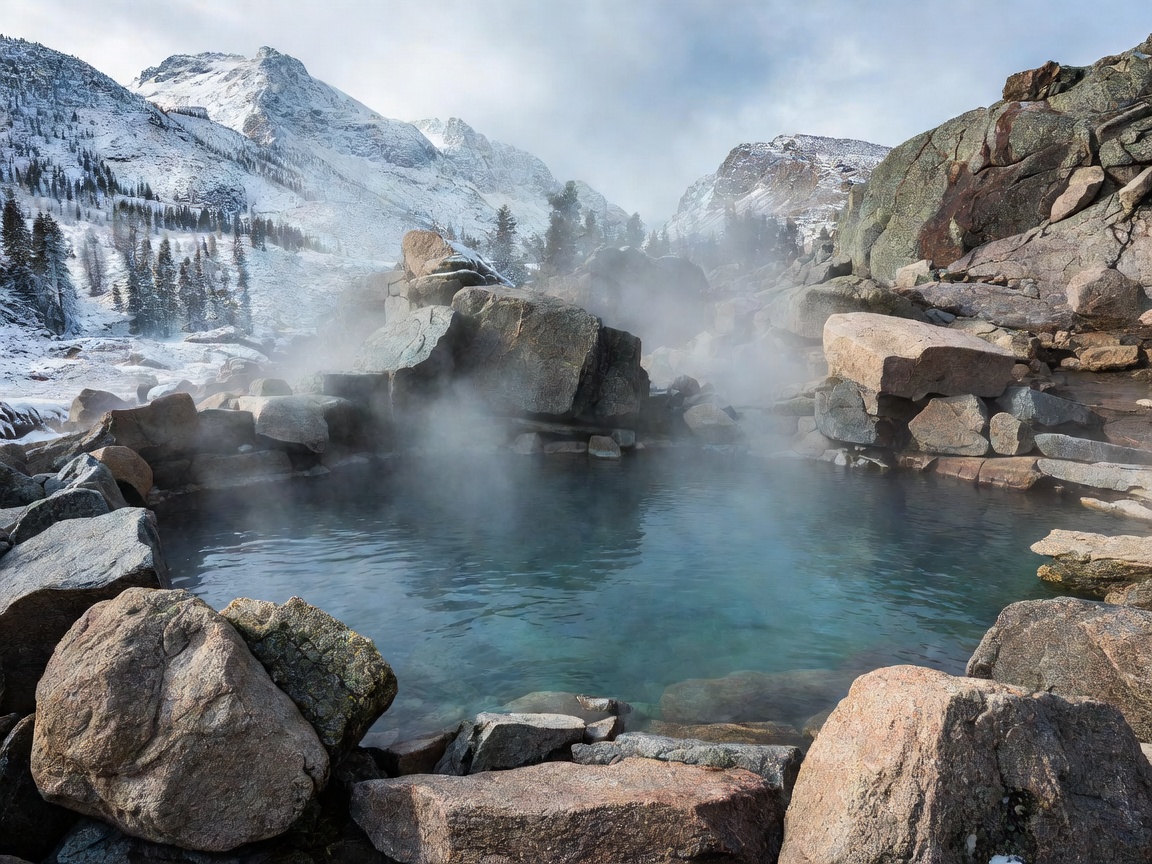 Thermal Geology
Geothermal Springs
Naturally rising geothermal aquifers carry silica, sulfur, magnesium, and bicarbonate minerals. The physical interaction between warm mineral water and exposed stone walls creates a slow release of atmospheric vapor that forms an insulating micro-cloud above the bath.
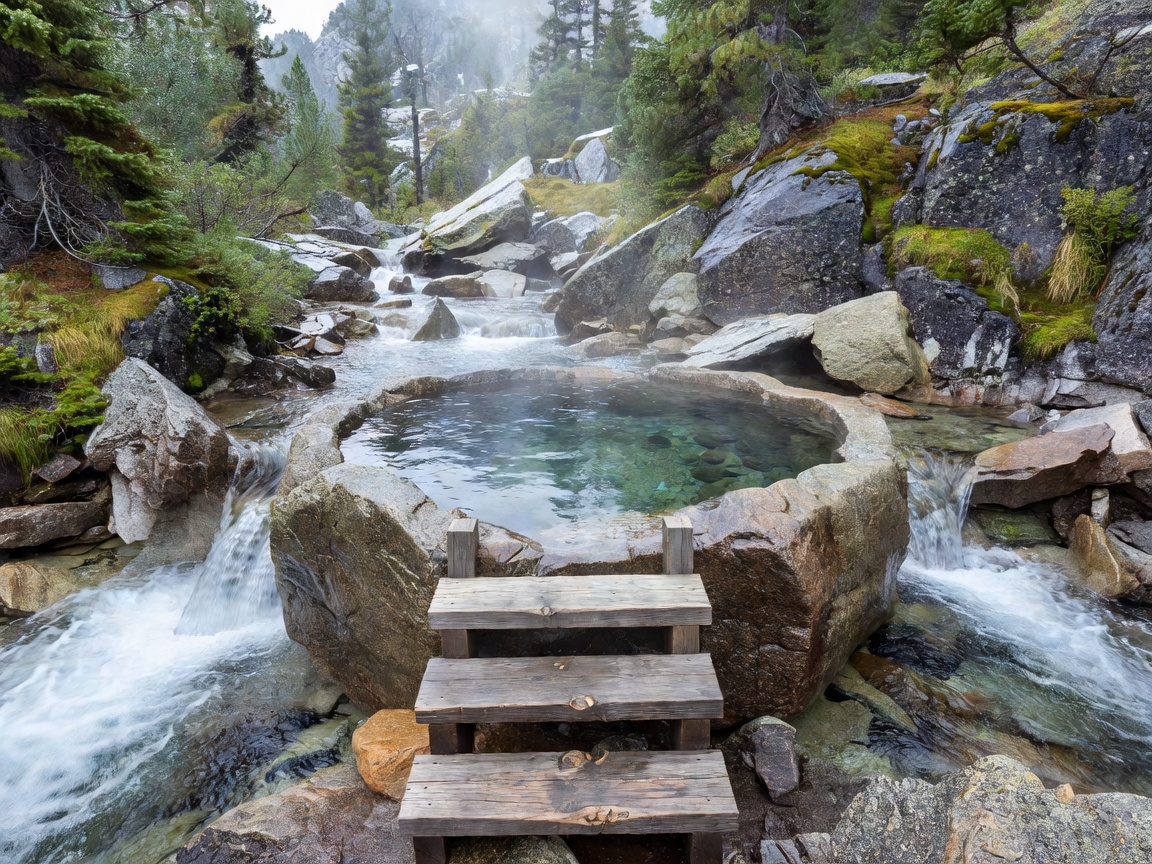 Vascular Contrast
The Mountain Plunge
The companion to heated immersion is the cold basin. Fed by unheated mountain runoff (6°C – 10°C), a brief immersion of 30 to 60 seconds triggers rapid peripheral vasoconstriction, promoting blood return to central organs followed by radiant cutaneous warmth.
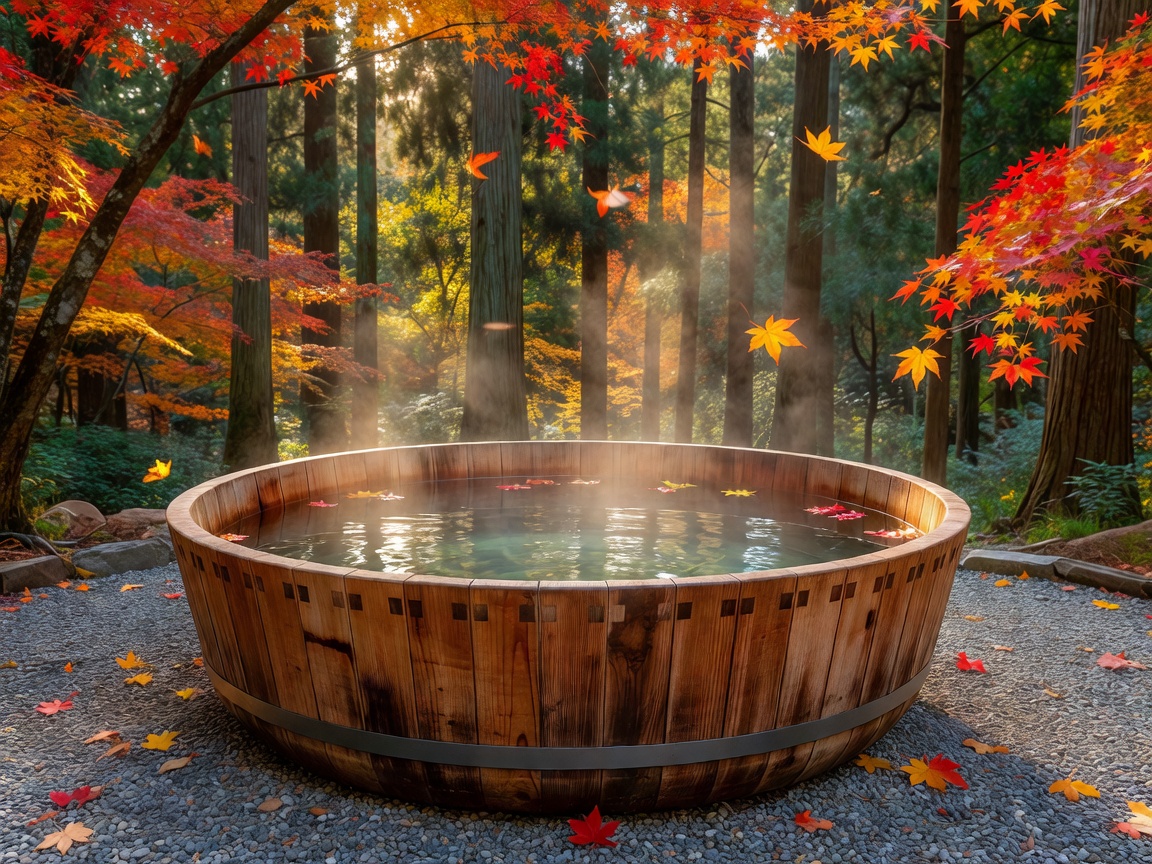 Timber Craft
Hinoki & Red Cedar Tubs
Unlike concrete or acrylic pools, wooden soaking tubs soften to the touch and expand naturally when filled. Natural aromatic oils (hinokitiol) infuse the steam with a mild woody scent that dampens elevated heart rates.
Principles of Thermal Bath Architecture
BATHING SPATIAL SEQUENCE (THERMAL CONTRAST)
--------------------------------------------------
[Ablution Area] → Low stool, warm rinse, gradual wetting
[Thermal Basin] → 15 mins at 40°C, horizon-level waterline
[Cooling Veranda] → Open air resting deck, wool wrap, hydration
[Cold Runnel] → 45 secs at 10°C, direct glacial input
[Sheltered Hearth]→ Radiant heat without artificial blowers
--------------------------------------------------
The Edge of Water: Horizon Lines
In high-end outdoor spa engineering, the overflow rim (weir) determines how the bather perceives scale. A vanishing edge positioned at exact water level eliminates the visual boundary between the surface of the pool and the meadow or lake beyond. This visual continuum encourages an effortless focus on external geography.
Stone Selection: Tactility and Temperature Retention
Submerged surfaces must never feel synthetic. Coarsely honed quartzite, river pebbles embedded in natural hydraulic lime, and flamed volcanic basalt provide safe underfoot traction without scraping damp skin. Dark basalt also functions as a thermal battery, soaking up midday sunlight and continuing to warm resting bathers as shadows lengthen.
Wind Shelters and Air Flow
An open bath must protect bathers' wet shoulders from sharp gusts without blocking airflow. Architects achieve this using staggered horizontal timber louvers or dry-stacked fieldstone parapets standing at 90 centimeters height—high enough to deflect harsh winds when seated, low enough to preserve panoramic vistas.